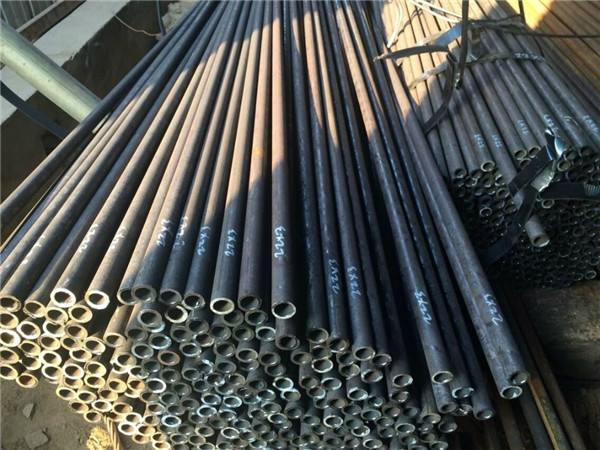
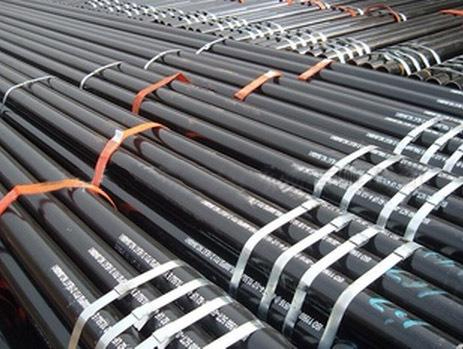
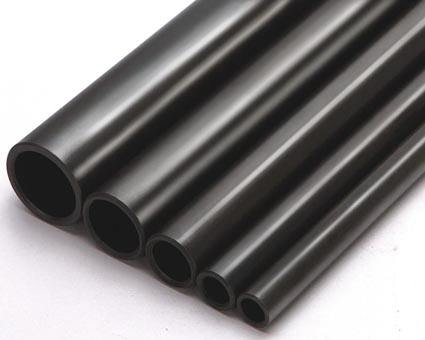
一次鱗的內部存(cún)在有較大的空穴(xué),ND鋼管一次氧化鐵皮為灰黑色鱗層,呈片狀覆蓋在鋼(gāng)板表麵。鱗層主要成分由磁鐵(Fe3O4)組成。氧化鐵皮可分為一次氧化鐵皮、二次氧化鐵皮、三次氧化鐵(tiě)皮和紅色(sè)氧化鐵皮。一次氧化鐵皮:鋼在熱軋前,往往要在1100~1300℃加熱(rè)和保溫。在此溫度下,鋼表麵於高溫(wēn)爐氣接(jiē)觸發生氧(yǎng)化反應,生成1~3mm厚的(de)一次鱗以及由粗軋側壓不充分、除鱗不徹底所(suǒ)致。該一次鱗也稱為一次(cì)氧化鐵皮。
Iron oxide scale can be divided into primary oxide scale, secondary oxide scale, tertiary oxide scale and red oxide scale. Primary scale: Before hot rolling, steel is usually heated and kept warm at 1100 - 1300 C. At this temperature, oxidation reaction occurs on the steel surface in contact with high temperature furnace gas, resulting in a primary scale 1-3 mm thick and caused by inadequate side pressure and incomplete descaling during rough rolling. The primary scale is also called primary iron oxide scale. There are large holes in the primary scale. The primary oxide scale of ND steel pipe is grey-black scale, covering the surface of steel plate in sheet form. The scales are mainly composed of magnets (Fe3O4).
二次氧化鐵皮:熱軋鋼坯從加熱爐出來後,經高壓(yā)水除去一次鱗後,即表麵氧化鐵皮脫落,進行粗軋。在短(duǎn)時間的(de)粗軋過程中鋼坯表麵與水和空氣(qì)接觸,鋼坯(pī)表麵產(chǎn)生(shēng)了二次鱗,nd鋼管也稱為一次氧(yǎng)化鐵(tiě)皮。二(èr)次鱗(lín)受水平軋製的影響厚度較薄,鋼坯與鱗(lín)的界麵應力小,ND鋼管所(suǒ)以(yǐ)剝離性(xìng)差。如果(guǒ)噴射高壓水不能完全除去二次(cì)鱗,鱗殘留在鋼板表麵的情況下進行精軋,產品表麵就會出現缺陷。二次氧化鐵皮為紅色鱗層,nd鋼管呈明顯的長條、壓入狀,沿軋製方向(xiàng)帶狀分(fèn)布,鱗層主要成(chéng)分(fèn)由(yóu)方鐵礦(kuàng)(FeO)、赤鐵礦(Fe2O3)等微粒組成。
Secondary oxide scale: After hot-rolled billet comes out of the heating furnace, the scale is removed by high pressure water, that is, the oxide scale on the surface falls off and rough rolling is carried out. During short roughing process, the surface of billet contacts with water and air, and the surface of billet produces secondary scale. The ND steel pipe is also called primary oxide scale. The thickness of secondary scale affected by horizontal rolling is thinner, the interface stress between billet and scale is smaller, and the peeling property of ND steel pipe is poor. If spraying high-pressure water can not completely remove the secondary scale, and the scale remains on the surface of the steel plate for finishing rolling, defects will appear on the surface of the product. The secondary oxide scale is red scale. The ND steel pipe is obviously long and pressed, and distributes along the rolling direction. The main components of the scale are composed of iron ore (FeO), hematite (Fe2O3) and other particles.
nd鋼管三次氧化鐵皮: 熱軋精軋過程中,帶鋼進入每架軋機(jī)時(shí)都將產生表麵氧化鐵皮層。軋製後(hòu)通過最終的除鱗或在每(měi)架軋機之間時還將再次產生氧化鐵皮。因(yīn)此,軋輥作用下的(de)帶鋼(gāng)表麵條件(jiàn)將取決於進入各架軋機前形成的氧化鐵皮的數量和(hé)特性。這(zhè)時(shí)的氧化鐵皮(pí)稱為三次氧(yǎng)化鐵皮,因為它是在除鱗之(zhī)後。nd鋼管進入精軋機之前形成(chéng)的。
Third iron oxide scale of ND steel pipe: During hot rolling and finishing, iron oxide scale will be formed on the surface of strip when it enters each rolling mill. Iron oxide scale will be produced again after rolling through final descaling or between each rolling mill. Therefore, the surface condition of strip under roll action will depend on the quantity and characteristics of oxide scale formed before entering each stand of rolling mill. At this time, the scale of iron oxide is called tertiary scale, because it is after descaling. ND steel pipe formed before entering finishing mill.
三次氧化鐵皮缺陷肉(ròu)眼可見: 黑褐色、小舟狀。相對密集、細小、散沙狀地分布在缺陷(xiàn)帶鋼表麵,細摸有手感,酸洗後在帶鋼表麵缺陷處留下深淺不一的針孔狀小麻坑,它們在正常(cháng)熱軋帶鋼的表麵上是看不見的。
Three times of iron oxide defects can be seen naked eye: black-brown, boat-shaped. Relatively dense, fine and loose sand distribute on the surface of defective strip steel, which has a fine feel. After pickling, pinhole pits with different depths are left on the surface of defective strip steel. They are invisible on the surface of normal hot rolled strip steel.
紅色(sè)氧化鐵皮: 紅色氧化鐵(tiě)皮僅發生在高(gāo)矽含量等特定的鋼種上,主要由於(yú)在鋼坯加(jiā)熱過程中,表(biǎo)麵氧化物與基體金屬強烈齧合(hé)所致。無明顯深度,呈不規則片(piàn)狀。
Red iron oxide scale: Red iron oxide scale only occurs in special steel with high silicon content, mainly due to the strong meshing between surface oxide and base metal during billet heating. No obvious depth, irregular sheet.
紅色氧化鐵皮(pí)分兩種: 一種在板寬方向非均勻分布,主要(yào)分布在中間,偏向操作側(cè),ND鋼管(guǎn)紅色與蘭色處有明顯水印,在(zài)鋼板長度方向上也不均(jun1)勻,個(gè)別部位稍輕些。這種紅色氧化鐵皮較厚,矯直時可崩(bēng)起,可用高壓風吹去,殘餘紅色很易擦下色,此紅色氧化鐵皮稱紅鏽較貼切。另一種紅色氧化鐵皮沿板寬分布比較均勻,一般靠邊部100mm內稍重些,ND鋼管卷外部比內部重些。這種紅色氧化鐵皮較薄,不易擦下色,鋼板越厚(hòu)紅色越重。ND鋼管這種紅(hóng)色氧化鐵皮其他一些鋼(gāng)種也存在,具有一定(dìng)的普遍性。
There are two kinds of red oxide scales: one is non-uniformly distributed in the direction of plate width, mainly distributed in the middle, biased to the operation side. There are obvious watermarks in the red and blue parts of ND steel pipe, and it is not uniform in the direction of steel plate length, and slightly lighter in some parts. This kind of red oxide scale is thicker, can collapse when straightening, can be blown away by high-pressure wind, residual red is easy to rub off color, this red oxide scale is called red rust more appropriate. Another kind of red oxide sheet distributes evenly along the width of the sheet, which is slightly heavier within 100mm on the edge and heavier outside than inside of ND steel pipe coil. This kind of red oxide scale is thinner, and it is not easy to rub off the color. The thicker the steel plate, the heavier the red. ND steel pipe, a kind of red oxide scale, also exists in some other steels, which has certain universality.

0510-83207888